Custody Schedule Examples: Every Common Pattern With a 2-Week Grid
This guide is general information, not legal advice. Custody rules differ by state and country; check with a family-law professional for your situation.
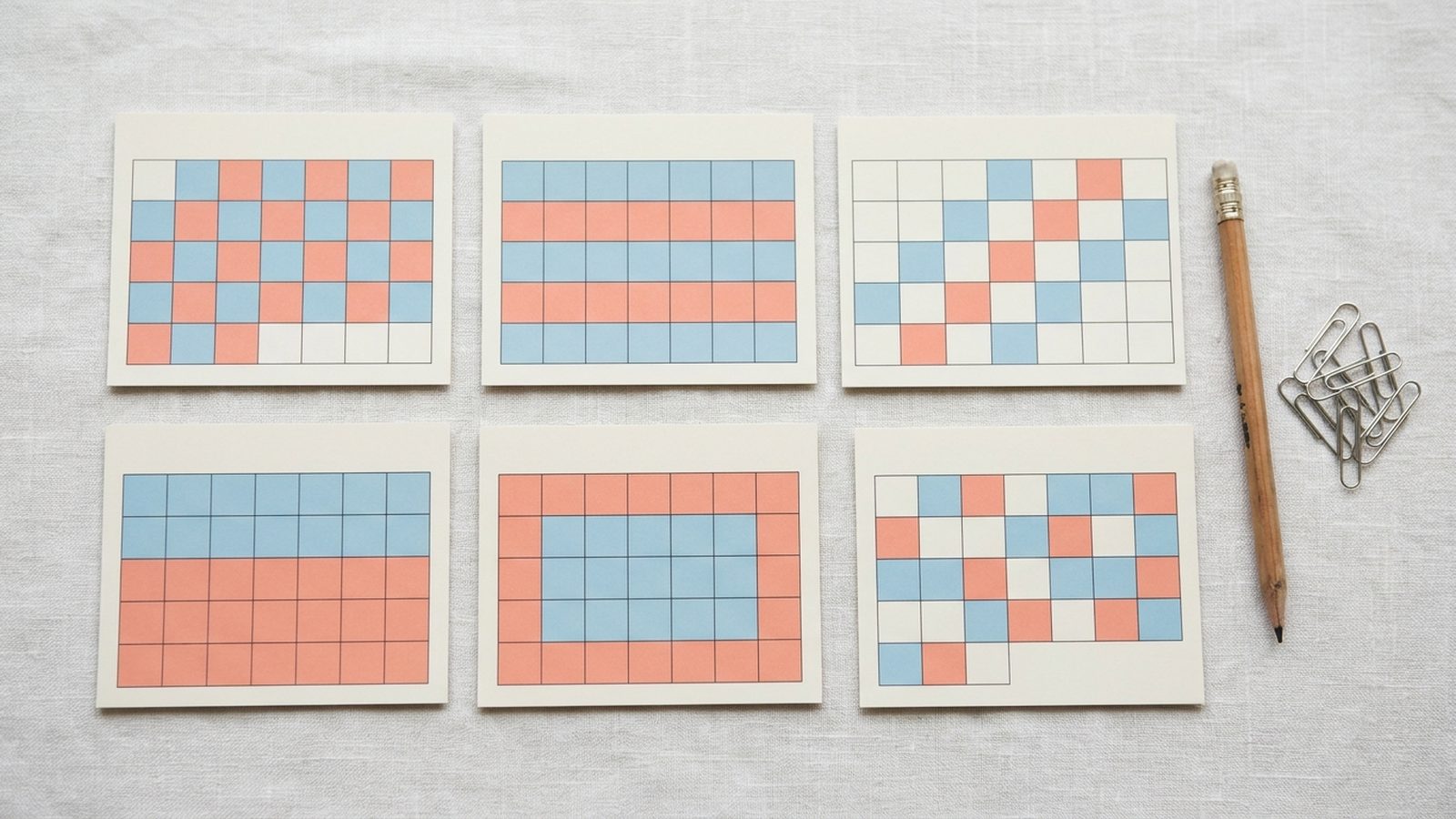
Eleven custody schedules cover almost every arrangement families actually run, and they sort into three families: equal 50/50 rotations (2-2-3, 2-2-5-5, 3-4-4-3, alternating weeks), weekday/weekend splits landing between 60/40 and 70/30 (3/4 day swap, 4-3, extended weekend, every third week), and weekend-only patterns around 80/20 (every other weekend, 1st/3rd/5th weekends). The eleventh is not a pattern at all — it is the no-fixed-schedule case, where you log days instead of planning them. Among families who picked a named schedule in the SplitDay Custody Study 2026 (n=357), weekend-based patterns led at 36% and alternating weeks came second at 23%.
Every pattern below gets the same treatment: what it is, a two-week grid you can read at a glance, the thing that usually goes wrong, and a link to the full guide. In the grids, ● marks the parent who has that night. One caveat worth saying once: an overnight count is not the same as a “days touched” count, and the two produce very different percentages for the weekend patterns.
Every pattern at a glance
Scan the two middle columns first. Exchange count is how much logistics the schedule costs you; the longest stretch is how long a child goes without seeing one of you — the single number that matters most for younger children.
| Pattern | Split | Exchanges / 2 weeks | Longest stretch away | Usual age fit | Full guide |
|---|---|---|---|---|---|
| 2-2-3 | 50/50 | 6 | 3 nights | 18 months – 5 years | Guide |
| 2-2-5-5 | 50/50 | 4 | 5 nights | 6 – 12 years | Guide |
| 3-4-4-3 | 50/50 | 4 | 4 nights | 3 – 12 years | Guide |
| Alternating weeks (7-7) | 50/50 | 2 | 7 nights | 6 – 18 years | Guide |
| 3-4 day swap | 43/57 | 4 | 4 nights | 3 – 12 years | Guide |
| 4-3 (60/40) | 57/43, usually written 60/40 | 4 | 4 nights | 3 – 12 years | Guide |
| Extended weekend | 60/40 as written; 57/43 on overnights | 4 | 4 nights | 6 – 12 years | Guide |
| Every third week | 70/30 | 2 per 3-week cycle | 14 nights | 6 – 18 years, long distance | Guide |
| Every other weekend | 80/20 | 2 | 12 nights | 5 years and up | Guide |
| 1st, 3rd & 5th weekends | 80/20 | 2, or 4 across a fifth weekend | 12 nights in an ordinary month | 5 years and up | Guide |
| No fixed schedule | whatever you actually log | varies | varies | any age | Guide |
2-2-3
The kids spend two nights with one parent, two with the other, then a three-night weekend back with the first — and the whole thing mirrors in week two, so each parent lands exactly seven overnights a fortnight. Nobody ever goes more than three nights without seeing either home, which is why it dominates the toddler and preschool years.
| Night | Week 1 | Week 2 | ||||||||||||
|---|---|---|---|---|---|---|---|---|---|---|---|---|---|---|
| Mon | Tue | Wed | Thu | Fri | Sat | Sun | Mon | Tue | Wed | Thu | Fri | Sat | Sun | |
| Parent A | ● | ● | · | · | ● | ● | ● | · | · | ● | ● | · | · | · |
| Parent B | · | · | ● | ● | · | · | · | ● | ● | · | · | ● | ● | ● |
Watch out: six exchanges a fortnight is the highest count on this page. If handoffs are tense, or the two homes are more than a short drive apart, that friction adds up fast.
2-2-5-5
Two fixed weekdays each, then a five-night block that carries the weekend, alternating between the parents. Because the first four weekdays never move, both households can build a real routine around them — swimming is always a Tuesday thing, and everyone knows whose Tuesday it is.
| Night | Week 1 | Week 2 | ||||||||||||
|---|---|---|---|---|---|---|---|---|---|---|---|---|---|---|
| Mon | Tue | Wed | Thu | Fri | Sat | Sun | Mon | Tue | Wed | Thu | Fri | Sat | Sun | |
| Parent A | ● | ● | · | · | ● | ● | ● | ● | ● | · | · | · | · | · |
| Parent B | · | · | ● | ● | · | · | · | · | · | ● | ● | ● | ● | ● |
Watch out: the five-night block always starts mid-week, so a child leaves for school from one home and comes back to the other. Pack the bag the night before or the reading folder will live in the wrong house.
3-4-4-3
A three-night block, a four-night block, then the lengths swap in week two so the fortnight comes out at seven nights each. It is the even-split version of the 3/4 day swap, and the usual next step for families who have outgrown 2-2-3 but are not ready for a full week apart.
| Night | Week 1 | Week 2 | ||||||||||||
|---|---|---|---|---|---|---|---|---|---|---|---|---|---|---|
| Mon | Tue | Wed | Thu | Fri | Sat | Sun | Mon | Tue | Wed | Thu | Fri | Sat | Sun | |
| Parent A | ● | ● | ● | · | · | · | · | ● | ● | ● | ● | · | · | · |
| Parent B | · | · | · | ● | ● | ● | ● | · | · | · | · | ● | ● | ● |
Watch out: the handoff day moves between week one and week two. Families who love this pattern write both weeks into the calendar rather than trusting anyone to remember which week it is.
Alternating weeks (7-7)
Seven nights with one parent, seven with the other, one exchange a week. It is the most-chosen equal-time pattern in our 2026 data — 23% of families who picked a named schedule — because there is nothing to remember beyond whose week it is.
| Night | Week 1 | Week 2 | ||||||||||||
|---|---|---|---|---|---|---|---|---|---|---|---|---|---|---|
| Mon | Tue | Wed | Thu | Fri | Sat | Sun | Mon | Tue | Wed | Thu | Fri | Sat | Sun | |
| Parent A | ● | ● | ● | ● | ● | ● | ● | · | · | · | · | · | · | · |
| Parent B | · | · | · | · | · | · | · | ● | ● | ● | ● | ● | ● | ● |
Watch out: a full week is a long time for a child under six. Most families running this pattern add a midweek dinner or a standing video call so the off-parent does not vanish for seven days.
Read the full Alternating weeks (7-7) guide →
3-4 day swap
Three nights with one parent, four with the other, identical every single week. Nothing flips, so the answer to “whose house tonight?” is the same in January as it is in June. The price of that is a standing one-night tilt: six nights against eight across a fortnight.
| Night | Week 1 | Week 2 | ||||||||||||
|---|---|---|---|---|---|---|---|---|---|---|---|---|---|---|
| Mon | Tue | Wed | Thu | Fri | Sat | Sun | Mon | Tue | Wed | Thu | Fri | Sat | Sun | |
| Parent A | ● | ● | ● | · | · | · | · | ● | ● | ● | · | · | · | · |
| Parent B | · | · | · | ● | ● | ● | ● | · | · | · | ● | ● | ● | ● |
Watch out: that tilt is not cosmetic. If overnight counts feed a support calculation where you live, a 43/57 split is not a 50/50 one — the alternating 3-4-4-3 pattern is the safer choice when the numbers matter.
Read the full 3-4 day swap guide →
4-3 (60/40)
Four nights with the weekday parent, three with the other, the same nights every week. The four-night side usually takes Monday to Thursday so school mornings run from one house, and the three-night side gets Friday to Sunday — a short block, but an undistracted one.
| Night | Week 1 | Week 2 | ||||||||||||
|---|---|---|---|---|---|---|---|---|---|---|---|---|---|---|
| Mon | Tue | Wed | Thu | Fri | Sat | Sun | Mon | Tue | Wed | Thu | Fri | Sat | Sun | |
| Parent A | ● | ● | ● | ● | · | · | · | ● | ● | ● | ● | · | · | · |
| Parent B | · | · | · | · | ● | ● | ● | · | · | · | · | ● | ● | ● |
Watch out: the weekly pattern says nothing about Christmas or spring break. Bolt a holiday schedule on top or the base rotation will quietly hand every big date to whoever owns that weekday.
Read the full 4-3 (60/40) guide →
Extended weekend
The classic “more than every-other-weekend, less than 50/50” compromise. One home keeps the school week; the other takes a long weekend that starts at Friday dismissal and ends at Monday drop-off, so the school gate does the handoff and the two adults never have to meet on a doorstep.
| Night | Week 1 | Week 2 | ||||||||||||
|---|---|---|---|---|---|---|---|---|---|---|---|---|---|---|
| Mon | Tue | Wed | Thu | Fri | Sat | Sun | Mon | Tue | Wed | Thu | Fri | Sat | Sun | |
| Parent A | ● | ● | ● | ● | · | · | · | ● | ● | ● | ● | · | · | · |
| Parent B | · | · | · | · | ● | ● | ● | · | · | · | · | ● | ● | ● |
Watch out: “extended weekend” says nothing about how often. Run every week, as drawn here, and it is 4 nights against 3 — 57/43, the 60/40 band. Run the same block every other week and the weekend parent drops to 3 nights of 14, about 21%. Write the frequency into the plan next to the days.
Read the full Extended weekend guide →
Every third week
A 21-day loop: the children stay two consecutive weeks with the primary home, then one full week with the other parent. It exists for families separated by a flight or a long drive, and for parents on multi-week work rotations, where a block has to be long enough to be worth the journey.
| Night | Week 1 | Week 2 | Week 3 | ||||||||||||||||||
|---|---|---|---|---|---|---|---|---|---|---|---|---|---|---|---|---|---|---|---|---|---|
| Mon | Tue | Wed | Thu | Fri | Sat | Sun | Mon | Tue | Wed | Thu | Fri | Sat | Sun | Mon | Tue | Wed | Thu | Fri | Sat | Sun | |
| Parent A | ● | ● | ● | ● | ● | ● | ● | ● | ● | ● | ● | ● | ● | ● | · | · | · | · | · | · | · |
| Parent B | · | · | · | · | · | · | · | · | · | · | · | · | · | · | ● | ● | ● | ● | ● | ● | ● |
Watch out: two weeks is an eternity to a young child. If you use this pattern, schedule the connection — fixed video-call windows at the same times each week beat “whenever we can”, which quietly becomes never.
Read the full Every third week guide →
Every other weekend
The most common non-equal arrangement, and the default many courts write when parents cannot agree — Indiana's Parenting Time Guidelines set the minimum regular parenting time for a child aged three or older as “On alternating weekends from Friday at 6:00 P.M. until Sunday at 6:00 P.M.” (Order Amending Indiana Parenting Time Guidelines, Cause No. 21S-MS-19). Weekend-based patterns like this one were the most-chosen named schedule in our 2026 data at 36%. Most families bolt a midweek dinner or overnight onto it, which lifts the split toward 65/35.
| Night | Week 1 | Week 2 | ||||||||||||
|---|---|---|---|---|---|---|---|---|---|---|---|---|---|---|
| Mon | Tue | Wed | Thu | Fri | Sat | Sun | Mon | Tue | Wed | Thu | Fri | Sat | Sun | |
| Parent A | ● | ● | ● | ● | · | · | ● | ● | ● | ● | ● | ● | ● | ● |
| Parent B | · | · | · | · | ● | ● | · | · | · | · | · | · | · | · |
Watch out: the headline percentage depends on what you count. Two of fourteen overnights is 14%; counting days the child is with that parent at all makes it look like 28%. Agree which measure you are both using before anyone quotes a number in a negotiation.
Read the full Every other weekend guide →
1st, 3rd & 5th weekends
Identical to every other weekend for most of the year, but anchored to the calendar month rather than to a rolling 14-day cycle: the non-residential parent takes the odd-numbered weekends of each month. In an ordinary four-weekend month that is on, off, on, off.
| Night | Week 1 | Week 2 | ||||||||||||
|---|---|---|---|---|---|---|---|---|---|---|---|---|---|---|
| Mon | Tue | Wed | Thu | Fri | Sat | Sun | Mon | Tue | Wed | Thu | Fri | Sat | Sun | |
| Parent A | ● | ● | ● | ● | · | · | ● | ● | ● | ● | ● | · | · | ● |
| Parent B | · | · | · | · | ● | ● | · | · | · | · | · | ● | ● | · |
Watch out: about four months a year carry a fifth weekend, and when they do the pattern delivers two weekends back to back across the month boundary — the fortnight drawn above. That is the design working, not a mistake, but it surprises people around school projects and sports fixtures.
Read the full 1st, 3rd & 5th weekends guide →
No fixed schedule
Some families have no repeating shape at all: an order that says “reasonable visitation”, gig or on-call work, or an informal arrangement worked out week by week. There is no cycle to hang a template on, so the model flips — you start from a blank calendar and record each day once it has happened.
| Night | Week 1 | Week 2 | ||||||||||||
|---|---|---|---|---|---|---|---|---|---|---|---|---|---|---|
| Mon | Tue | Wed | Thu | Fri | Sat | Sun | Mon | Tue | Wed | Thu | Fri | Sat | Sun | |
| Parent A | ● | ● | ● | · | · | · | ● | ● | ● | ● | ● | ● | · | ● |
| Parent B | · | · | · | ● | ● | ● | · | · | · | · | · | · | ● | · |
Watch out: a prefilled rotation actively misleads you here. It counts time that was assumed rather than time that occurred, and two parents then walk into a conversation about camp fees holding two different versions of the last three months.
Read the full No fixed schedule guide →
How to choose between them
Four things decide this, and only one of them is fairness.
Age. Younger children need shorter gaps; older children cope with longer, calmer blocks. Under three, keep the longest stretch to two or three nights — which rules out everything from alternating weeks downward. From six, school anchors the week and the longer patterns open up. Our custody schedule by age guide has the band-by-band detail.
Distance. Every exchange costs a drive. If the two homes are 40 minutes apart, a 2-2-3 rotation means six round trips a fortnight and it will wear both of you down; if a flight is involved, the honest options narrow to every third week and the long-distance patterns.
Work shifts. A fixed weekly pattern is useless against a rotating roster. Nurses, pilots, offshore crews and first responders usually need a schedule built around the roster rather than the calendar — see the shift-worker custody schedule guide.
Conflict level. If every handoff is a flashpoint, choose the pattern with the fewest exchanges you can live with and move the remaining ones to the school gate. Where communication itself is the problem, the structure to read next is parallel parenting, which is designed to minimise contact rather than improve it.
And if none of the eleven fits: that is the normal outcome, not a failure. In the 2026 study, 46% of families building a weekly pattern built a fully custom one rather than using any named template. Mixing is allowed. A 2-2-5-5 base with the weekend swapped, or a 4-3 with a midweek overnight bolted on, is still a schedule — see also our 60/40 custody schedule guide for the in-between band, and the custody split statistics for what other families settle on.
Print these grids, or build a full year
This page carries its own print stylesheet: press Ctrl/Cmd + P and the navigation, footer and banners drop away, leaving the comparison table and the eleven grids on paper. It is a reasonable thing to take to a mediation session or to stick on a fridge while you are deciding.
For a dated calendar rather than a pattern sketch, the printable custody calendar generator builds a colour-coded month from your own start date and names, and the 2026 custody schedule template covers the wording that goes around the grid. If you want the schedule expressed as a percentage instead, the parenting time calculator counts overnights for you.
Make it yours in SplitDay
All eleven patterns are free presets in SplitDay — the full custody calendar, every pattern, the scoreboard and exchange logging sit on the free plan, which is ad-supported. Pick a preset, set the date the rotation starts, and the calendar fills forward. If your week does not match any preset, tap the individual days: a custom week is what most families end up with anyway.
Then log the exchanges as they happen. That is the part that matters, because the pattern on paper and the pattern you are living drift apart within a couple of months — a swapped weekend here, a late pickup there. The scoreboard shows the split that actually occurred rather than the one the template assumed, and the full custody history exports as CSV you can share with a lawyer or mediator. One parent can run all of this alone; the other does not have to install anything. See the features or compare Free and Pro.
Frequently asked questions
What is the most common custody schedule?
Weekend-based patterns — every other weekend, 1st/3rd/5th weekends, or every weekend. They were chosen by 36% of families who picked a named schedule in the SplitDay Custody Study 2026 (n=357), ahead of alternating weeks at 23% and 2-2-3 at 13%. The bigger finding sits above that ranking: 46% of families built a fully custom weekly pattern rather than using any named template at all.
What is the best custody schedule for a 2 year old?
At two, keep the longest stretch away from either parent to about two or three nights, which points at 2-2-3 or another short-block rotation. Toddlers usually manage their first regular overnights but still lose the thread over longer gaps. Familiar routines and the same comfort object in both homes do more for the handoff than the pattern does — the toddler schedule guide covers the stage in detail.
What custody schedule has the fewest exchanges?
Among the fortnight-based patterns, alternating weeks, the extended weekend and every other weekend all run on two exchanges per two weeks. Every third week is lower still in absolute terms — two exchanges per 21 days — but it buys that by leaving a child up to fourteen nights away from one parent, which is a real cost rather than a free saving.
Can we mix two patterns?
Yes, and most families effectively do. A 4-3 with an added midweek overnight becomes 3-4-4-3; an every-other-weekend plan with a Wednesday dinner moves toward 65/35; a 2-2-5-5 base can keep alternating weekends on top. The only rule that matters is that the mixed version is written down in one place both households can see, because a pattern nobody can state out loud is a pattern that gets argued about.
What does 2-2-3 mean?
Two nights with one parent, two nights with the other, then three nights back with the first — and the blocks flip the following week, so the three-night weekend alternates. Over the full fourteen days each parent has exactly seven overnights, which makes it a true 50/50 pattern rather than an approximate one.
Is 50/50 always 7 days on, 7 days off?
No. Alternating weeks is only one of four equal-time patterns here. 2-2-3, 2-2-5-5 and 3-4-4-3 all reach seven overnights each per fortnight while keeping the longest gap down to three, five and four nights respectively. Week-on/week-off is the most popular of them, not the definition of equal time.
Try a pattern before you commit to it
All eleven patterns are free presets. Pick one, set the start date, and see a year of it laid out before you sign anything.
Deciding this with your co-parent right now? Send them this page and compare the grids side by side.