Toddler Custody Schedules (18 Months–3 Years): Short Blocks, Both Homes
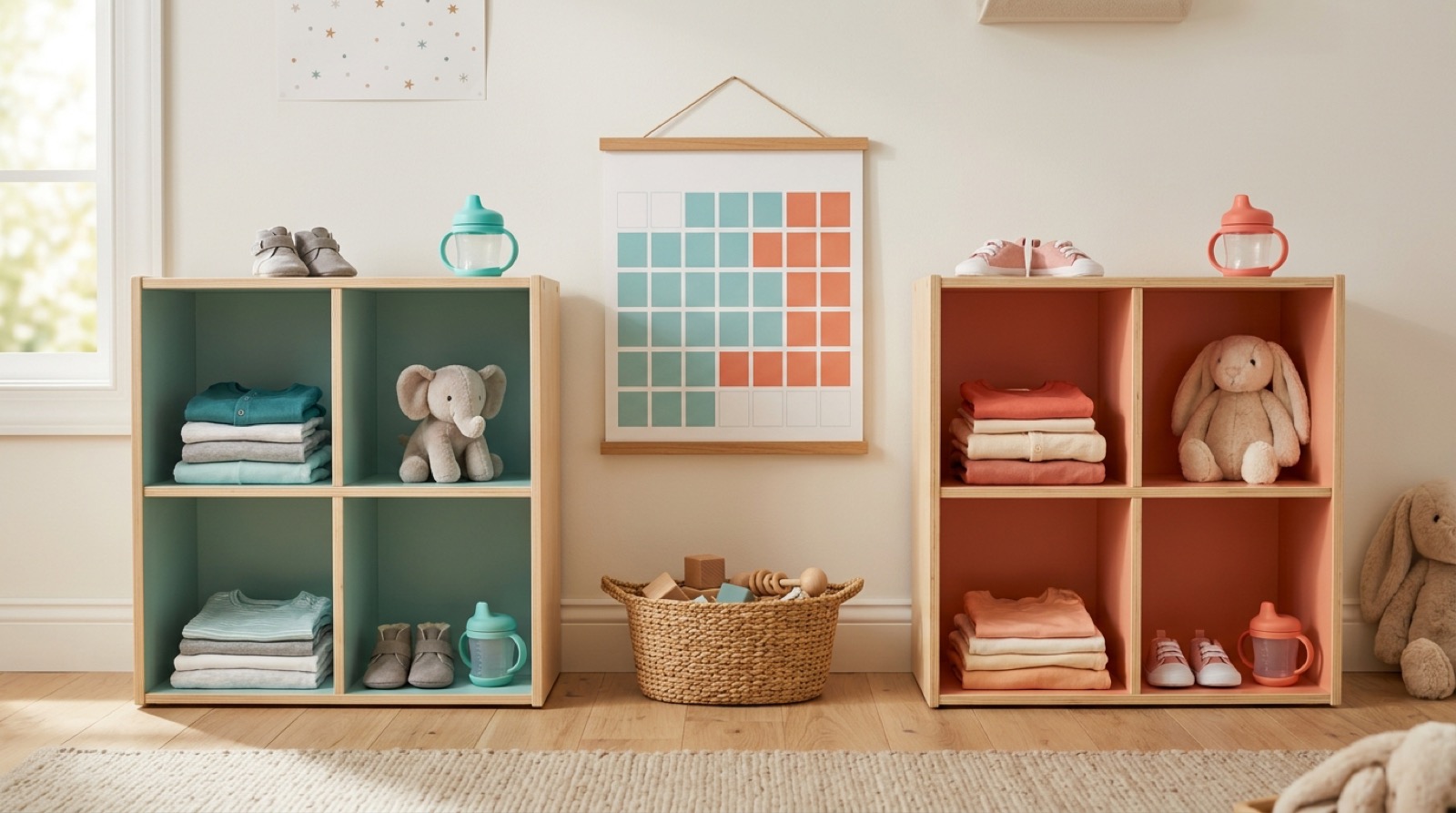
Toddlers — roughly 18 months to 3 years — can absolutely live in two homes, and most do overnights in both without trouble. What a toddler this age needs is short blocks and frequent returns: two or three days with one parent, then two or three with the other. The enemy at this age isn't the second home — it's a long gap. A schedule that keeps any one parent away for a week is harder on a 2 year old than two handoffs a week ever will be.
Why short blocks beat long ones for toddlers
A toddler's sense of time is short. A few days feels manageable; a week can feel like forever, and a very young child can't yet hold onto the idea that the other parent still exists and is coming back. That's why the guiding rule for ages 18 months to 3 is to minimize the longest stretch away from either parent, even if it means more handoffs. Frequent, predictable contact with both parents is what builds security at this age — not long, "efficient" blocks that suit adult calendars better than toddler brains.
The practical version: aim for no more than two to three nights away from a parent at a time. Two or three handoffs a week sounds like a lot to a grown-up, but to a toddler each one is just "now I'm with Mama, now I'm with Papa" — the rhythm itself becomes the routine.
Three schedules that fit toddlers
Three equal-time patterns come up again and again for this age. They differ mostly in one number that matters a lot to a toddler: the longest gap away from a parent.
| Schedule | Transitions / week | Longest gap from a parent | Best for |
|---|---|---|---|
| 2-2-3 | 3 per week (rotating) | 3 nights | Younger toddlers; parents who live close and want maximum contact |
| Alternating 2-day blocks | 3–4 per week | 2 nights | The youngest toddlers and those who struggle with any longer gap |
| 2-2-5-5 | 2 per week | 5 nights | Older, settled toddlers near 3; fewer handoffs, predictable weekdays |
Read the table by its middle column. Alternating two-day blocks keep the gap shortest, which suits a barely-2 year old, at the cost of the most handoffs. 2-2-3 is the sweet spot most families land on — three-night maximum, a repeating rhythm, and the same weekend logic every other week. 2-2-5-5 trades a longer five-night stretch for fewer transitions and fixed weekday homes; it fits a toddler closer to 3 who has shown they can go five days comfortably, and it sets up the week-based rotations of the preschool years.
If distance between homes is large, the math changes — long car or plane trips are hard on toddlers, and a schedule with fewer, longer blocks may win despite the gap. There is no single "best 2 year old custody schedule"; there is the one whose trade-off fits your child and your commute.
Keep the routine the same in both homes
For a toddler, the schedule matters less than the day inside it. Two homes are easy when the day feels the same in each. Practical things that help far more than they sound like they should:
- Naps at the same time. A toddler who naps at 1:00 at one house and 3:00 at the other is a toddler who's overtired at handoff. Agree on a nap window and hold it in both homes.
- Meals and bedtime on the same clock. Same rough dinner and bedtime in both houses means the body clock never has to reset. Bedtime is where inconsistency shows up first.
- One comfort object that travels. The bear, the blanket, the specific cup — whatever it is, it should ride along in the bag every single handoff. This one item does more to smooth transitions than any calendar tweak.
- A shared bag that goes back and forth. Pack the same essentials each time so nothing critical lives at only one house. Kids feel the difference when their things are with them.
- Similar rules, roughly. Homes don't need to be identical, but wildly different bedtimes or screen rules make each switch feel bigger than it is.
None of this requires the two of you to agree on parenting philosophy — just on the toddler's clock. The closer the two days line up, the more the second home stops feeling like a different world.
Transition behavior and regression: what's normal
Expect some reaction around handoffs. Tears at drop-off, extra clinginess, a rough night's sleep, a brief slide backward in potty training or eating — these are common in toddlers moving between homes and usually settle within a day of each switch. A toddler protesting a transition isn't a sign the schedule is wrong; it's a sign they're attached to the parent they're leaving, which is exactly what you want.
What helps: a short, predictable goodbye ritual you use every time (the same hug, the same phrase, the same "see you in two sleeps"), a calm handoff without a long tearful lingering, and the comfort object in hand. Keep the tone matter-of-fact — toddlers read adult anxiety instantly and mirror it.
When to consider adjusting the schedule: if distress is intense, doesn't ease after the first day, and shows up consistently over several weeks, the block length may be too long for where your child is developmentally — shortening the longest gap (say, moving from 2-2-5-5 toward 2-2-3) is a reasonable step. Persistent sleep or eating disruption, or distress that seems to be growing rather than fading, is worth raising with your pediatrician. Most of the time, though, a little upset at the door is just a toddler being a toddler.
What the research and the data say
Parents of toddlers often worry that two homes — and especially overnights away from one parent — will harm a young child. The broad research is reassuring on the core question of shared parenting. A review of 60 studies comparing joint physical custody with sole custody found children in joint-custody arrangements did better on measures of wellbeing in 34 studies, equal or better in 14, and worse in only 6. What that literature supports is frequent involvement of both parents — which for a toddler is precisely what short, alternating blocks deliver.
On what families actually choose: SplitDay's 2026 custody study (n=804) found 42% of separating parents set up a 50/50 split and 46% build a fully custom schedule, and that among equal-time rotations, 2-2-3 is the most popular after alternating weeks. For the toddler years, that popularity is well placed: 2-2-3 gives equal time while keeping the longest gap to three nights.
The research can tell you shared parenting works; it can't tell you your child. Watch how your toddler settles, and let that steer the block length more than any statistic.
As your child grows
The schedule that fits an 18 month old won't be the one that fits a 4 year old. If you're coming from the baby stage, our infant custody schedule guide covers the under-18-months rules. When your toddler is settling near 3, longer blocks and week-based rotations open up — that's the preschooler custody schedule (3–5 years). The through-line: as a child's sense of time stretches, the gaps between parents can stretch a little too.
Frequently asked questions
Can a toddler do overnights at both parents' homes?
Yes. Most toddlers between 18 months and 3 years handle overnights in both homes well, as long as the time away from each parent stays short. The goal at this age is frequent contact with both parents in blocks of two to three days, not one long stretch at each home.
What is the best custody schedule for a 2 year old?
For a 2 year old, schedules that keep the longest gap from either parent short work best. The 2-2-3 rotation is the most popular equal-time pattern for toddlers because no child spends more than three days away from a parent. Alternating two-day blocks work too. Longer patterns like 2-2-5-5 fit older toddlers who tolerate a five-day stretch.
Is it normal for a toddler to be upset after switching homes?
Yes. Clinginess, tears at handoff, sleep changes or brief regression after a switch are common and usually settle within a day. A steady handoff routine, a familiar comfort object that travels between homes, and matching nap and meal times in both houses all help. Persistent or worsening distress is worth discussing with your pediatrician.
Should a toddler keep the same routine in both homes?
As much as possible, yes. Toddlers rely on predictable naps, meals and bedtime to feel secure. When both homes hold roughly the same daily rhythm and the same comfort items, switching between them is far easier — the schedule changes but the day still feels the same.
Put both homes on one toddler-friendly calendar
Set a 2-2-3 or alternating-block pattern, keep naps and handoffs consistent, and let both homes see the same schedule. Free to start.
Working out a schedule for your little one right now? Share this with your co-parent and pick the block length together.